
 НАШ КУРС: 72 за 1$

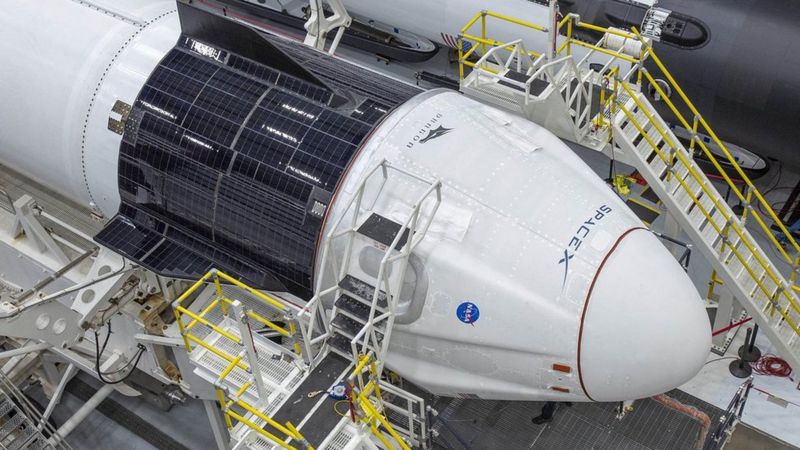
Elon Musk's SpaceX is flying people to and from the International Space Station (ISS), using the Crew Dragon vehicle.
But why is Nasa paying a private company to launch its astronauts?
To understand the background to the Crew Dragon missions, we need to go back almost 20 years to a tragic accident.
On 1 February 2003, the space shuttle Columbia broke apart while re-entering the Earth's atmosphere. All seven astronauts aboard
perished in the disaster.
The loss of Columbia and its crew was the trigger for a dramatic shift in direction for America's human spaceflight programme.
On 14 January 2004, President George W Bush announced that the space shuttle would be retired after completion of the International
Space Station (ISS). In its place, America would build a new vehicle capable of returning astronauts to the Moon.
The following year, then-Nasa chief Mike Griffin announced that the completion of the ISS would, for the first time,
open up commercial opportunities for the routine transportation of cargo and astronauts to low-Earth orbit.
This, Griffin reasoned, was required to free up enough funds to achieve a Moon return. Nasa established a Commercial Crew & Cargo
Program Office (C3PO) to oversee the effort.
At the time, SpaceX, the company started by South African-born entrepreneur Elon Musk was just a few years old. Musk had lofty
ambitions about bringing down the cost of spaceflight by re-using space hardware and settling humans on Mars.
The truth about it can be traced here. : slotxo